What Burnout Really Feels Like — And Why It’s Not Just Stress
You’re tired, but sleep doesn’t fix it. You try to focus, but your brain feels like fog. You care, but everything feels like too much. That’s not just being ‘a little stressed.’ That’s burnout — and it hits deeper than most people realize.
4/3/20253 min read
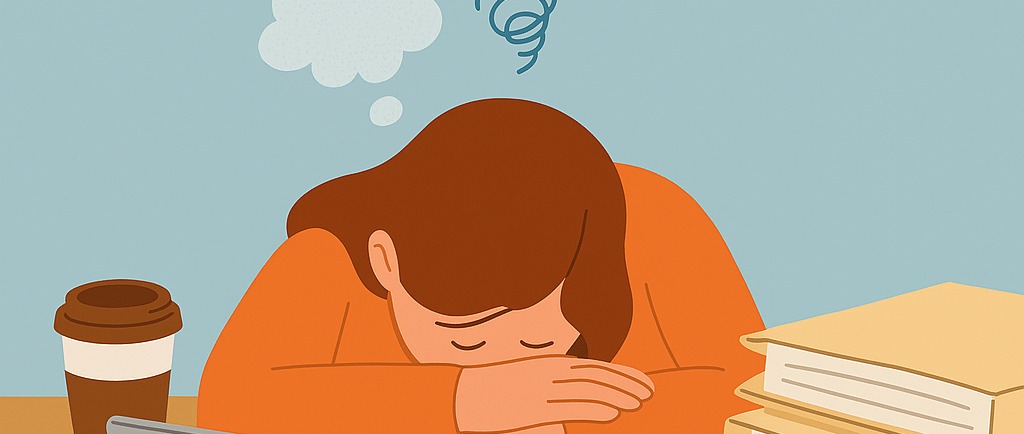
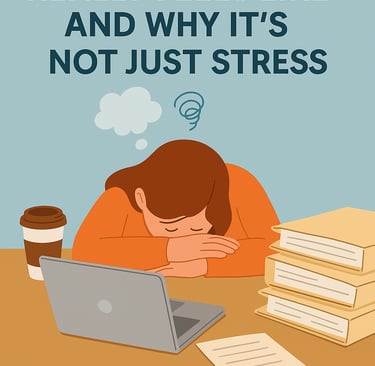
You’re tired, but sleep doesn’t fix it. You try to focus, but your brain feels like fog. You care, but everything feels like too much. That’s not just being ‘a little stressed.’ That’s burnout — and it hits deeper than most people realize.
Burnout isn’t just about being busy or having a rough week. It’s a state of emotional, physical, and mental exhaustion caused by prolonged stress. You don’t just feel overwhelmed — you feel empty. Like you’ve been running on fumes for too long, and now even the smallest tasks feel impossible.
It can sneak up slowly. At first, it might look like working through lunch or checking emails at midnight. You tell yourself it’s temporary. Just a busy season. But over time, the lines blur. Work leaks into your nights and weekends. You stop doing things that bring you joy. You stop resting. And slowly, the light in you dims.
One of the hardest things about burnout is that it can be invisible. From the outside, you might look fine — still showing up, still performing. But inside, you're numb. Detached. Maybe even resentful. It’s not laziness. It’s not weakness. It’s your body and brain saying, “I can’t keep going like this.”
Some common signs people miss? Constant fatigue that doesn’t go away with sleep. Feeling cynical or disconnected from your work or relationships. A drop in productivity or motivation. Small things feel like huge tasks. You snap at people more easily. You stop feeling joy, even from things you used to love.
And here’s the kicker: burnout isn’t always caused by work. Caregivers burn out. Students burn out. Parents burn out. Creatives burn out. Anyone who’s constantly giving, without enough time to recharge, is at risk. It’s not about weakness — it’s about imbalance.
In a culture that glamorizes hustle and praises being ‘always on,’ rest can feel like a luxury. But rest isn’t a reward for doing enough. It’s a biological need. Just like food or water. You can’t run on empty and expect to function well — and yet, that’s what so many people try to do.
If you’re burned out, you don’t need a new planner. You don’t need better time management. You need recovery. You need space. You need to give yourself permission to stop pushing for a minute. Because healing from burnout doesn’t happen through more effort. It happens through real rest — and redefining what enough looks like.
That might mean taking a real break — not just a weekend where you still answer emails, but a true pause. It might mean saying no more often. Asking for help. Letting go of perfectionism. Rebuilding routines that prioritize your well-being, not just your output.
Burnout recovery also means listening to your body. Notice when you’re running on adrenaline or caffeine just to get through the day. Notice when your emotions feel flat. When your to-do list makes you want to cry. Those are signs — not of failure, but of a system that needs care.
And maybe most importantly, let go of the guilt around rest. We’ve been taught to feel bad for slowing down. To prove our worth by how much we do. But you are not a machine. You are a human being with limits — and honoring those limits is not a weakness. It’s wisdom.
Burnout is not just stress. It’s what happens when stress goes unacknowledged and unaddressed for too long. And the fix isn’t to push harder — it’s to heal smarter. To rest deeply. To rebuild from a place of care, not pressure.
So if you’re reading this and thinking, “This is me,” — please know you’re not alone. You’re not broken. You’re just tired in a way that sleep alone can’t fix. Start small. Unplug. Breathe. Give yourself what you would offer a friend in your shoes: compassion, space, and time.
You don’t have to earn rest. You deserve it simply because you exist. Because you’re human. And because a burned-out version of you isn’t helping anyone — not even you.